

Does Top Bar Have To Be Cleaned Well Before Package Installed
A Newbee Disclaimer
Information technology is ofttimes said that beekeeping is as much an fine art every bit it is a scientific discipline, and that is especially of import to remember during your first year. Bees are wild creatures whose decisions vary wildly according to location-specific variables; information technology's obvious that they don't read the aforementioned books that we practice. 😉 A skillful apiculturist listens to and takes cues from their bees, just that is an ability that comes with time and feel. For now, merely discover as much as you tin and look for things to go awry occasionally! Apiculture should be viewed as a partnership between us and the bees - nosotros are not and will not ever exist in control of them (which you lot will find out soon enough).
A Box o' Bees
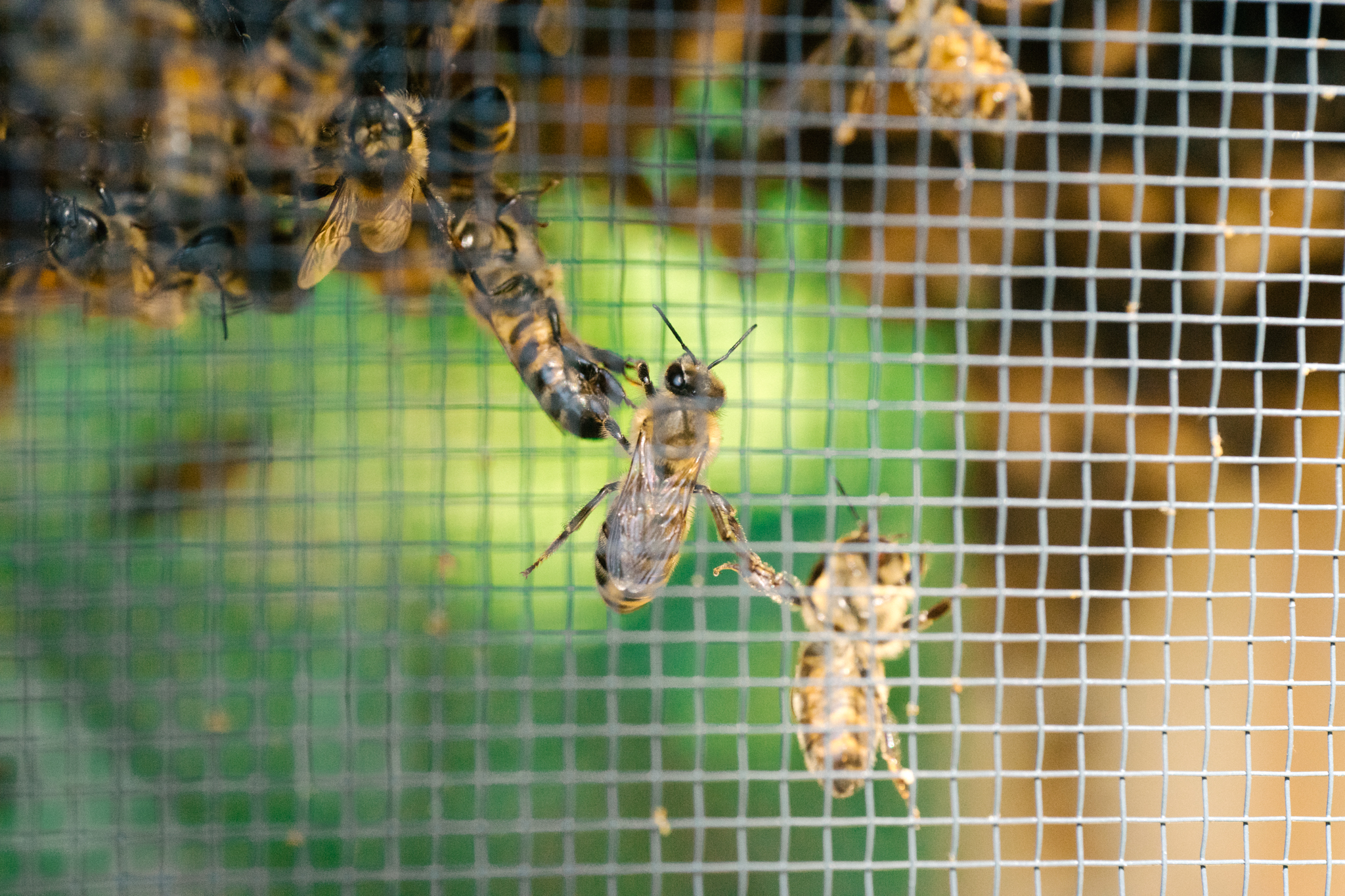
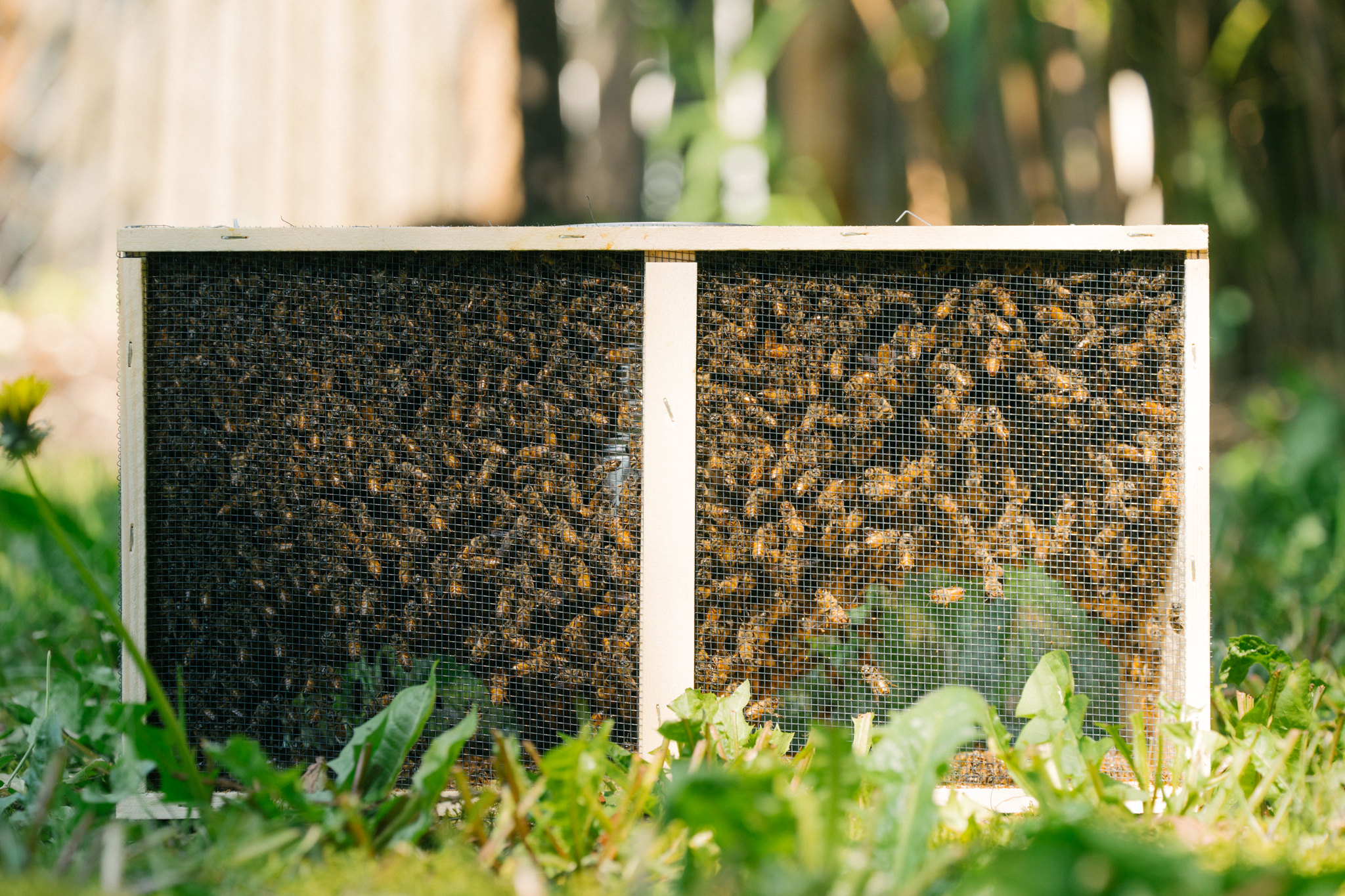
Packages are small boxes jam-packed with bees - nearly x,000 of them (roughly 3 lbs). They likewise include a mated queen and a can of sugar syrup to sustain them during their travels. The packages are constructed out of wood and screen, allowing for a lightweight container that provides the bees with enough of ventilation. These packages by and large come from large apiaries (bee yards) that are dedicated to raising bees and shipping them all over the country. The compact crates are total of worker bees, drones and a queen who is safely stowed in a protected muzzle. Packaged bees are mostly taken from the upper breed comb of stiff hives. They are shaken into the box using a funnel.
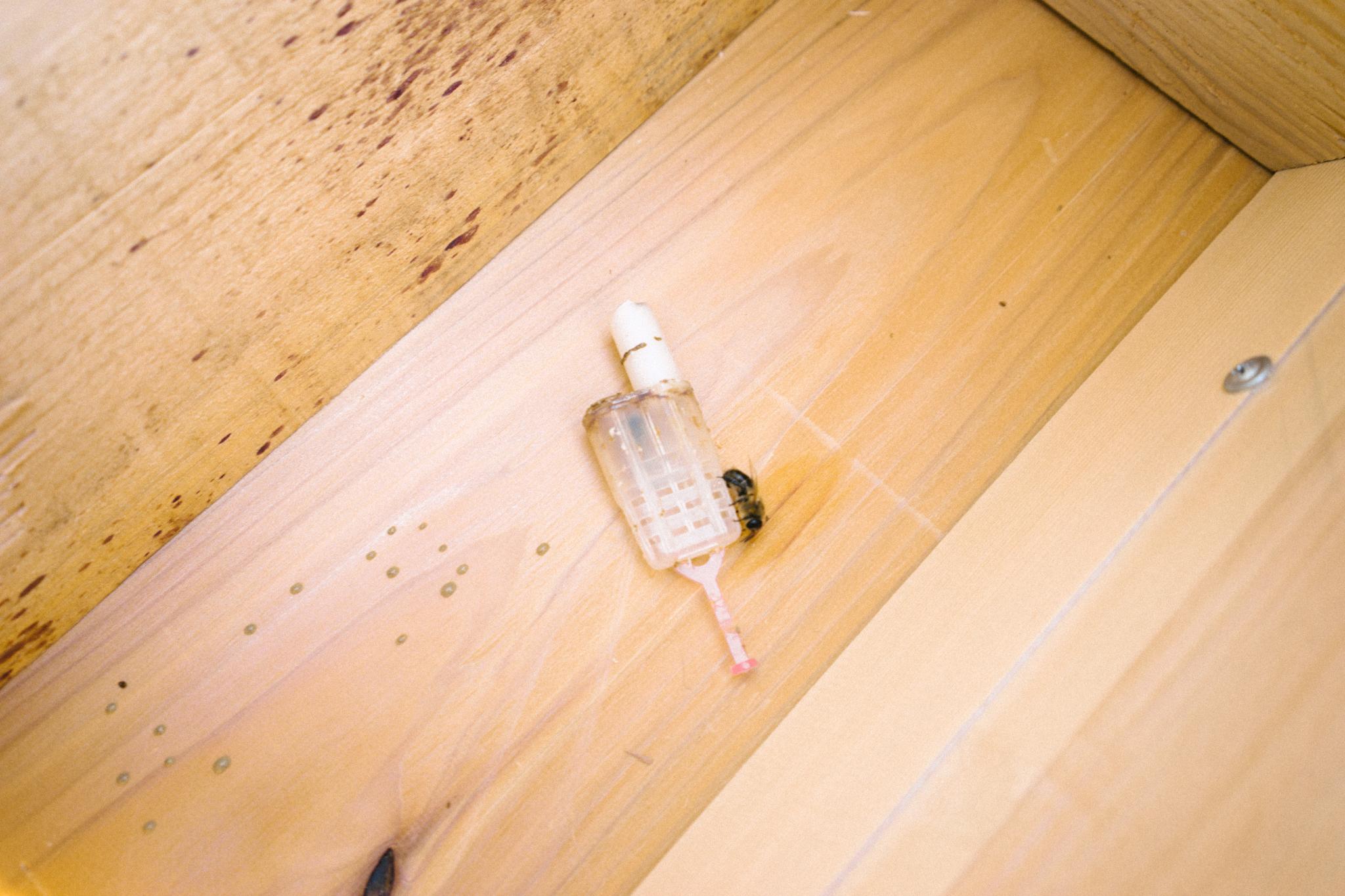
Packages do non include any kind of frame or comb. Once received, the packaged bees are shaken direct into an empty hive and the caged queen is placed inside with them. The bees will chew through a candy plug in the queen cage to release her, and so they volition become started on their decorated bee business.
The Briefest History Ever
Packages were attempted as early as 1870, but didn't really start gaining traction until about 1910. They were shipped all over the land, and later the world, by trains, trucks, boats and planes. These days, you're most likely to meet them expedited with a shipping service, where they arrive conveniently on your doorstep.
Pros:
-
They will work with whatever style of hive! Pinnacle Bar, Warre, Langstroth, Skep… doesn't affair.
-
Packages are produced on a massive calibration, and then they are readily available in the bound.
-
Because they can be shipped anywhere, they are bachelor to people who don't accept nearby sources of honeybees.
-
You lot get to observe the process of the bees starting from scratch, which is educational for a new beekeeper. This also applies to swarms.
Cons:
-
The stress of being packaged and shipped is crude for the bees and can have a negative touch on their health.
-
If the bees are being shipped from across the country, they will not be acclimated to your location (weather, forage, pests, etc.), which lowers the chances of success.
-
Packages are typically shaken together from multiple "production hives", while the queens are pulled from split "queen rearing" hives. This incurs a greater take chances of the bees rejecting the queen, every bit she is not their queen mother.
-
The quality of mass-produced honeybee queens take been called into question in recent years, and the fact that there are but a a few large operations raising the bulk of these queens is dramatically reducing the cistron pool.
The Early Bird Gets the Bees...
Due to a sharp incline in bee die-offs in recent years, packages and nucs are in high demand. If yous are planning to purchase a package in the upcoming season, it is important to plan ahead. I would start researching during the winter and plan to have your parcel reserved by tardily Feb, if not earlier; people more often than not start taking orders equally early equally November.
It is all-time to notice nearby sources of bees, because these bees will be acclimated to your locale. If you are in a pinch, though, they tin be ordered from anywhere. In some cases, whatsoever bees are meliorate than no bees.
Packet Pick-up
Be sure to audit your package thoroughly before accepting it. Bump the bees to the bottom of the box to uncover the queen cage, and then make sure she is alive and kicking in at that place. Check the bottom for dead bees - some dead bees are acceptable, but a thick layer of dead bees is non.
You must exist ready to install the bees once you go far home. They can survive package life for a few days, just it is best to become them hived as soon as possible. The only reason I would wait to install a packet is in the event of farthermost weather (recollect hurricane or temps budgeted freezing). Light rain or cold temperatures are still a go; if anything, it will strength them to stay put!
If yous must wait, go on them in a cool location. Hot weather in the package weather can exist fatal to the package. Plan to lightly mist the bees with water in a spray bottle every 1/2 hour or so.
Bundle Installation
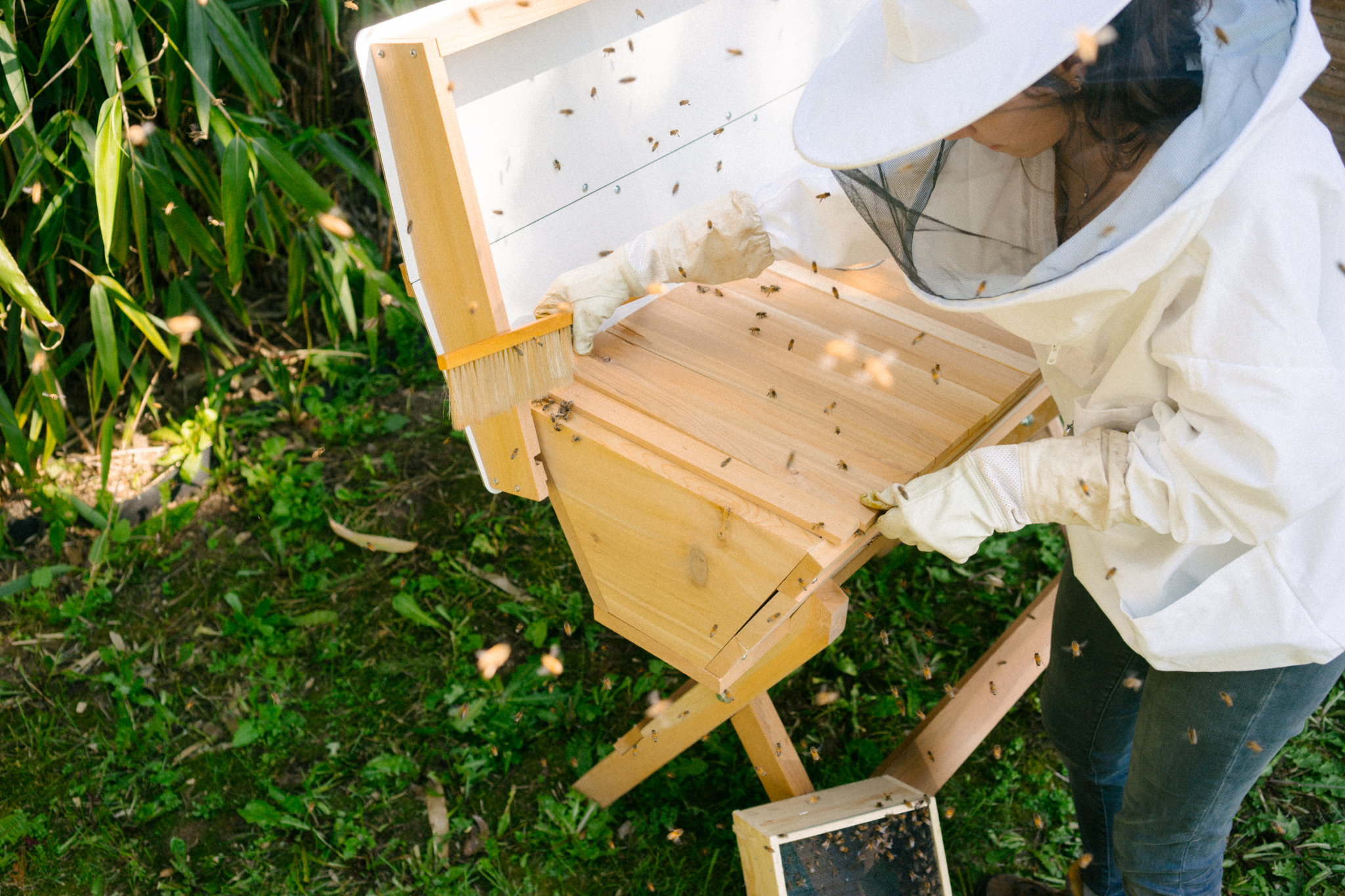
At present for the fun function! Installing a package is incredibly simple, but can exist unnerving for people who have never had the pleasure of finding themselves in the middle of 10,000 confused honeybees. Remember to have your time and make slow, but confident, movements. At present is not the fourth dimension to be gentle - that volition make the process far longer and more drawn out than information technology needs to be, for both y'all and the bees.
-
Set up your hive. On a pinnacle bar hive, count eight - 10 frames and and then insert the follower board; remove the 8 - 10 frames. In a Warre hive, set the outset box on the bottom board with all bars in place; ready the 2nd box on top with all confined removed. In a Langstroth hive, depending on how many boxes yous are starting out with, place lesser boxes with frames in place, and then add top box with a few middle frames removed.
-
Gather your tools (a brush and pliers or a hive tool to pry the syrup tin can from the package) and put on your protective gear.
-
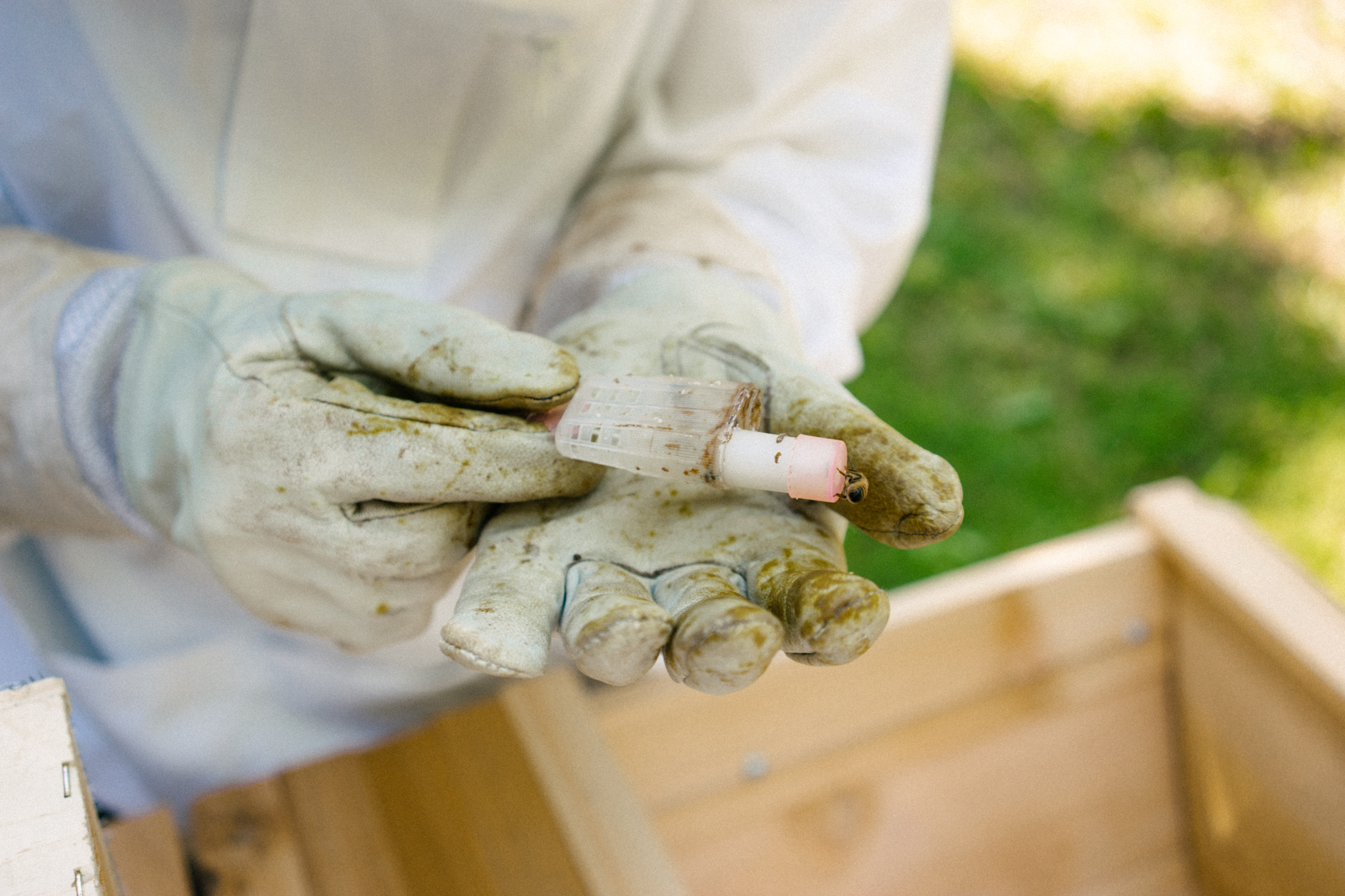
Bump your bees to the lesser of the bundle to clear the queen cage. Elevator out the feeding tin can so advisedly reach in to remove the queen muzzle. Bees volition be escaping - don't stress nearly this; they won't go far. Once you accept the queen, gently replace the feeding can.
-
Identify the queen cage in the hive. Of import: This part volition vary depending on where you are located. If you are in a warm location and are confident that your night temperatures will not dip below fifty°F, place the queen in the bottom of the box (floorboard on TBH, superlative of frames directly nether top box for Warre & Langstroth). If you think your temperatures might get beneath that, do not put her at that place. The bees will cluster at the superlative of the hive to stay warm, and she will exist left backside and freeze to decease. Y'all can hang her from a bar or frame at the top, but be enlightened that they volition near probable start to build comb effectually the muzzle that you will take to correct afterward on. Michael Bush just releases the queen directly - read more nigh his method here.
-
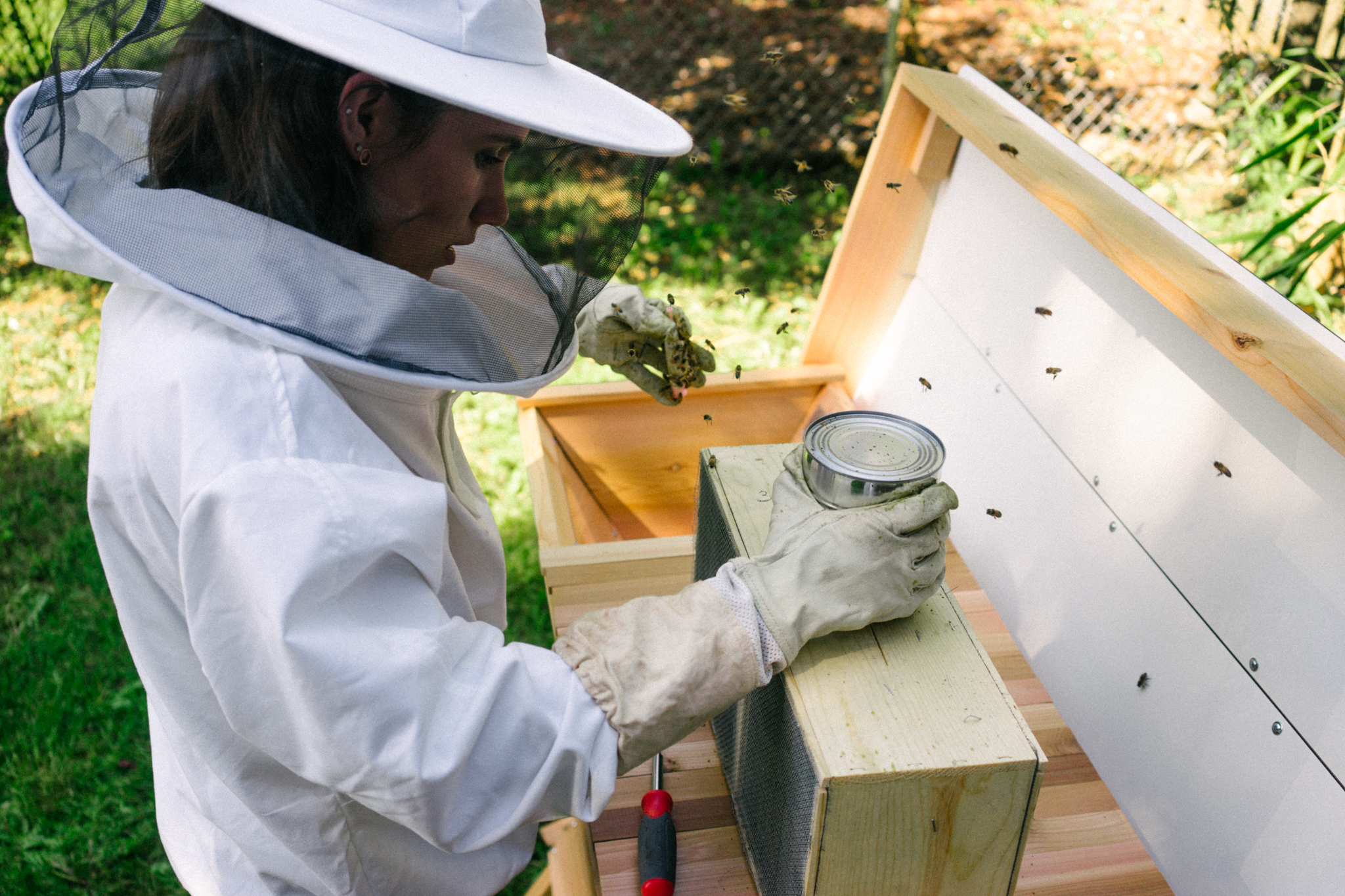
Bump bees to the bottom 1 more than time and remove the feeding can. Flip the parcel over and begin to shake the bees into your hive. Yous want to shake firmly to remove the bees every bit quickly as possible. You may need to bump the package a few more times to loosen the bees.
-
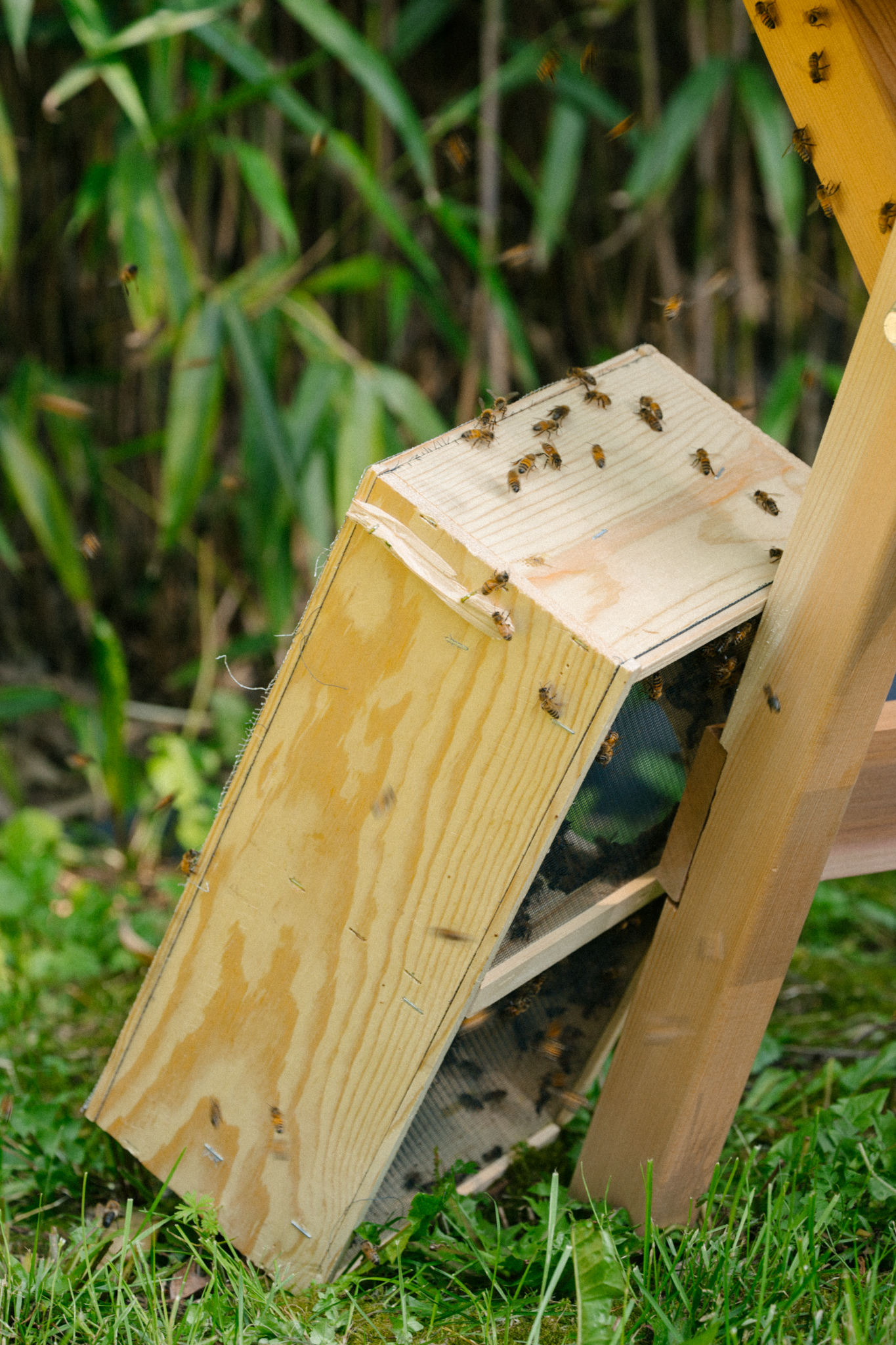
One time the package is generally empty (there volition be a few stragglers), set it on the ground next to the hive. The rest of the bees will detect their fashion into the hive to join the others.
-
Gently replace your frames or bars, and shut upwards the hive. Exist sure that y'all supplant all of your bars and frames, because the bees volition build comb in empty spaces, and that'southward a real pain in the donkey to clean up.
Notes on Installation:
-
Don't smoke the packet prior to installation! They demand the pheromones to get organized.
-
Exercise not shut your bees in the hive later on installation. I hear this misguided piece of advice passed around adequately oftentimes, only information technology has non proven to be an effective method for preventing absconsion. Your bees need to start gathering resources immediately, and shutting them in will just delay this process.
-
Since they are starting without any food or brood, you should feed them 1:one sugar syrup upon installation, and for every bit long as they are drinking it.
-
Because packaged bees do not showtime out with breed (baby bees), you will run across the population dwindle in the first month. This is normal. There are no new bees emerging to replenish the older population, and new bees won't starting time emerging until virtually 30 days after installation.
-
Do non spray the bundle with saccharide water prior to installation. This tin can drown bees and volition definitely make them unreasonably sticky. If you retrieve they need to be fed, spray very lightly or merely refill the feeding tin.
-
Practise non place the package directly into the hive. I've also seen this passed around online, decrying the brutal practice of shaking the bees. Here'southward the bargain: it doesn't carp them that much, and the cross-rummage they build in/around the bundle volition exist a hurting in the ass for yous, and much more of a pain in the ass for the bees when you take to get in there and clean it up!
A few days afterwards...
You will want to go out your bees be for a few days, merely it is important to cheque-in on them in well-nigh two - 3 days. If you open up your hive at this fourth dimension and notice that the queen is still in her muzzle, go ahead and release her. Open up upward the muzzle gently, property it within the hive so that she doesn't become spooked and fly away.
Sneak Preview
Every bit a new beekeeper, it is important to effigy out a good residuum of interaction with your new hive(s). Too much and they might abscond, too little and y'all won't know if there's a problem. As a general rule of thumb, a 15 - 30 minute inspection every week or so during the busy season is appropriate. For a freshly installed parcel, though, information technology will demand to be a little scrap more. Y'all'll do your 3 twenty-four hours cheque-in to ensure the queen is released, and then I would continue doing short inspections every few days until y'all are confident that things are moving in the right management. If you are keeping foundationless hives, this is likewise a good mode to keep an eye on new comb construction and correcting any kleptomaniacal comb before information technology becomes a problem. Here is a quick timeline of what to wait:
-
Week 1: The queen should be released past day 3. Rummage structure volition be underway, and you should see eggs one time rummage is drawn (~5 days later on installation).
-
Week Two: The queen should be laying, and the bees volition be stocking up on nectar and pollen. There should be several frames/bars built with consistent progress. There should be enough of eggs and larvae at this point, but no capped brood quite yet.
-
Week Three: There should be consequent rummage construction; progress on nectar and pollen stores; eggs, open brood and some capped brood.
-
Week Four: The bees may need more infinite at this point; add bars, frames or boxes equally necessary. There should be enough of nectar and pollen, and perchance some capped honey, too. Y'all should be seeing open up and capped brood and an expanding population as brood starts to emerge.
-
Calendar week 5: You should have a fully functioning, very busy hive at this bespeak! Keep an eye on hive space, expanding as needed.
Troubleshooting
I'll be honest, packages often experience more than trouble than a nuc, swarm or divide. However, they are often the only reliable method for new beekeepers to populate their hives, and this is perfectly okay. Packaged bees are better than no bees, and well-nigh of the time - the bees are successful and grow into a strong, healthy colony. Information technology is important to know what could go incorrect, though, and so that you can be prepared. Equally the erstwhile adage goes, "Hope for the best, but programme for the worst."
Potential problems in guild of severity:
Dead or Rejected Queen
The queen that comes with your package was introduced to the bees when the package was shaken together. She is non their queen mother, and they consider her to be a stranger; she would likely be killed if allowed to run loose immediately. For this reason, she is locked in an introduction cage. These cages work by containing her in a safe infinite with a candy plug. Every bit the bees chew through the candy, they have time to become acquainted with this new queen through her scent, and hopefully accept her every bit one of their own. Sometimes, though, they don't. They will release the queen and actually kill her by surrounding her and heating her up until she dies. It's called "balling", and it's pretty savage. The hive population will die out within 40 days of installation without a queen, so if yous suspect something has happened, accept immediate steps to correct the problem (either by purchasing a queen or adding frames of eggs and open brood, if bachelor).
Starvation
Considering packages are starting completely from scratch, it is important to have a good understanding of how they will exist accessing resource to start rummage construction and food storage. If the weather condition is decent and there is strong menstruum going on, allow them forage. Notwithstanding, if you lot accept an ominous conditions forecast (for bees, thats weather condition below l degrees and/or heavy rain) or there is a nectar dearth, go ahead and feed them for as long as either of those atmospheric condition concluding. I am not a huge proponent of feeding, but if they have no other style to access food or water, they will die without it.
Absconsion
Sometimes, later a successful package installation, a beekeeper will render to the hive and detect it empty. When bees pack up and leave, nosotros say that they accept absconded. Information technology's disappointing, just at that place's not really anything we tin do virtually information technology. For ane reason or some other, a particular colony may find their new living environment to be unsatisfactory. It doesn't necessarily mean that anything is wrong with the hive, merely I have heard that open up screened lesser boards contribute to the problem. If y'all are using a screened bottom lath, make sure it is closed up during installation and until they are well-established in the hive. Too much ventilation dissipates the scent of the hive and makes pheromone communication nigh impossible for them, which is confusing, so they go out. Close those bottom boards up.
Supersedure
Permit'due south say your package has been moving along just fine. Yous see eggs and larvae, and your bees are storing up nectar and pollen at a good pace. Heck - yous've fifty-fifty seen the queen waddling effectually in in that location! Just you open your hive up 1 day and find that several queen cells accept been synthetic. What's upwards? Well, sometimes the bees gauge the quality of their new queen to exist substandard, and they decide to replace her. This is normal, specially in packages. We refer to this every bit supersedure. The best thing to do in this case is trust the bees and let them carry out the process. Culling the queen cells will just set them back.
Cross combing
Cross-combing, in the yard scheme of things, isn't that large of a deal. Some bees depict perfectly straight rummage, and some don't. The best way to handle this trouble is to prevent information technology from happening in the first identify past keeping an eye on new comb construction, only if you find a hive full of crooked rummage - don't despair. This is hands fixed with a second set of hands (or a rummage stand), a castor, a hive tool or pocketknife and something to re-attach the comb (cypher-ties and large hair clips piece of work for top confined, large rubber bands or twine work for Langstroth frames). This is a keen guide for fixing cantankerous-rummage.
Good luck!
Simply call up that your primary job at this betoken is to find. Step in merely when necessary. Exist enlightened of potential problems, simply trust your bees to exercise what they need to. Don't set up what ain't broke, folks. And above all, enjoy it!

Does Top Bar Have To Be Cleaned Well Before Package Installed,
Source: http://www.beeandbloom.com/blog/the-low-down-on-bee-packages
Posted by: camachoofeautioull1979.blogspot.com
0 Response to "Does Top Bar Have To Be Cleaned Well Before Package Installed"
Post a Comment